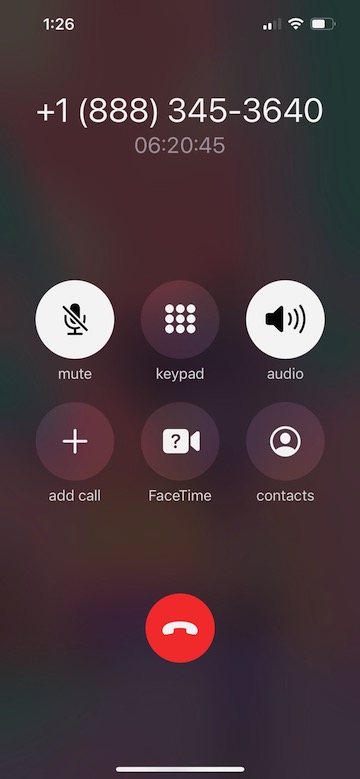
I’ve been on hold for 5 6.5 hours now, and waiting for a callback from this airline for about a day.
When there’s an issue, my mind tends to go straight to solution mode. I find exploring ideas and running through hypothetical situations quite cathartic. I actually think this is my super skill as a user experience professional — brainstorming improvements is something I just do.
As an aside, my “solutioning” tends to make me a bad listener. If someone is venting to me, it takes a lot of energy to not blurt out the suggestions my brain is running through. Listening is a skill I’ve worked to improve for the past six years or so, though, and I hope it shows.
For today’s post, I’ll be exploring how to improve airline customer service. Because, despite the Intercoms and Solvvys of the world, my god does this industry need some love.
Adding dynamic wait indicators
Any digital designer knows the importance of system status visibility. Heck, if you’ve ever interacted with a system (which, if you’re reading this, you must’ve), you probably do, too.
Visbility of system status is actually Nielsen’s #1 usability heuristic of user interface design:
The design should always keep users informed about what is going on, through appropriate feedback within a reasonable amount of time. – Jakob Nielsen
This heuristic, while written for traditional digital systems, is equally as important to phone calls. Much of the frustration that comes with phone holds is the unknown.
When will Alaska f&#!ing call me back?
Am I going to spend my entire Christmas on the damn phone?
Alaska told me upfront how long the wait time is. That’s great. But they told me it’d be an hour and 50 minutes, and we’re now at the 6 hour 20 minute mark with no further updates.
This is where dynamic wait indicators come in. If I’m using a system, I should be able to interact with the system to understand my position within in that system. Especially when there’s a large delay between my initial action and the intended result. In this case, I want to see progress, that my time isn’t for naught, and know that I’ll eventually get to add my pet to my reservation.
Some potential implementations:
- Give customers the ability to dial a number to hear the wait time
- Let customers text a number to get an update on their wait time
- Provide a link to view live wait time (and perhaps other useful information)
I’m also not convinced that wait time is the right call (no pun intended) to indicate status in this case. Time estimates are probably the most beneficial indicator… when they’re somewhat accurate. From what I can tell today, wait times are damn unreliable, which makes sense. While some customer support calls might take a few minutes to resolve, like my request to travel with my dog, others may take hours, like rescheduling a multi-leg flight for a family who’s original plans were cancelled. Unfortunately, when time estimates are so far off the mark, customers lose trust, rendering them practically useless. Maybe a better indicator could be the number of customers ahead of you in line.
Engendering trust with callbacks
Before I continue, let me caveat with this: I think callback is a great thing. However, I think the implementation has room for improvement.
Callbacks are gaining popularity in the customer service sector, and airlines are no exception to this trend. If you haven’t encountered a callback service before (count your blessings), here’s how the process works:
- The customer calls a support line.
- If there’s a wait to speak with a customer service representative, the automated system tells the customer the estimated wait time.
- They automated system asks the customer whether they’d like to receive a “callback” from when their a representative is available, instead of waiting on hold the whole time.
- The customer must dial some number or give a prompt to agree to the callback, or continue to wait on hold.
- The automated system records the number, perhaps double-checking the phone number to call back with, and then hangs up.
- The customer may receive a text from the automated system letting them know they’re in line.
- Eventually, the customer receives a phone call from the automated service to get additional information or, occasionally, speaks with a representative immediately.
This process varies between services, of course, but this is how Alaska Airline’s system works.
I think one of the biggest reasons why some customers won’t adopt callback systems, or heck, why even those utilize callback hate it, is a lack of trust. So I’m going to focus on that.
There’s probably some cognitive bias at play here. We’re more used to holding the line and successfully talking to an agent, and new things are scary. Our monkey brains are so scared of loss that we’ll suffer through hours of discordant hold music — just because we can guarantee that someone will eventually pick up based on our past experiences. There’s probably a sunk cost fallacy in here as well. If you’ve been waiting on hold for a long time, you probably feel that you might as well wait a little longer.
My point about dynamic wait indicators definitely applies here. I want to know the system is actually doing something, especially whenever my faith slips and I want to go back to a regular hold.
Second, I need a lot more context. Do I have to stay awake in case they call me at 3am? What happens if I don’t pick up when they return my call? If customers are to trust callbacks, they should be able to find the answers to questions like these.
Automating the sh!t out of things
The less people have to call, the better, especially when the task can be easily automated or moved away from live support channels.
These improvements will probably save money, too. Solvvy boasts that businesses generate a positive ROI from AI support in 3–4 months on average, and Intercom even has a ROI calculator you can mess around with.
Improving hold music
Literally this.
Gamifying holds
Please don’t.